
Why Is My Garage Door So Loud Under the Bedroom?
Published July 21, 2026 · Alfonso Garage Door
Loud garage doors under a bedroom are almost always worn rollers, loose hardware, or an old chain drive opener, and in San Francisco homes with tuck-under garages, Alfonso Garage Door usually fixes the noise for $90 to $260 in a single visit.
A lot of Sunset and Richmond District houses were built with the garage tucked right under the main bedroom, so every clunk and rattle travels straight up through the joists. I get calls from people who are losing sleep over a door that used to be quiet. Most of the time it is fixable in one visit, and it is rarely as expensive as folks expect.
What Makes the Noise So Much Worse Under a Bedroom?
Sound travels differently through a house than it does through open air. When the garage sits directly beneath the bedroom, the wood framing acts like a drum. Every bit of vibration from the door, the springs, or the opener gets picked up by the joists and carried right into the room above. A door that would sound mildly annoying in a detached garage can feel like a small earthquake when it is under your headboard.
This is especially common in the older Sunset District and Richmond District homes I work on, where the garage was built into the ground floor as a tuck-under space. The structure was not designed with sound dampening in mind, it was designed to fit a car under a house on a narrow lot. That means even small mechanical issues get amplified in a way they would not be elsewhere.
The good news is that because the sound is amplified, small fixes often make a big audible difference. You do not always need a new door or a new opener. Sometimes tightening the right bracket or swapping a set of rollers cuts the noise by more than half.
Is Some Noise Just Normal?
Every garage door makes some sound. A healthy door will hum a bit as the opener motor runs and click softly as the rollers pass through the track. That is normal and nothing to worry about. What is not normal is banging when the door starts or stops, a grinding sound as it travels, or a rattle you can feel through the bedroom floor.
If your door has gotten noticeably louder over the past few months, something has changed mechanically. Rollers wear down, hinges loosen, and springs stretch slightly over years of use. None of that happens overnight, which is why the noise tends to creep up gradually until one day you notice it is keeping you up.
I always tell people the same thing on these calls. If the noise is new or getting worse, do not just live with it. It is rarely an emergency, but it is also rarely something that fixes itself. A quick safety inspection can tell you in about twenty minutes whether it is a cheap fix or something bigger.
What Actually Causes Most of the Racket?
In my experience, worn rollers cause the majority of noisy door calls. Steel rollers, especially the ones without ball bearings, get louder as they wear and as the track gathers dust and grime. Swapping them for nylon rollers is one of the most common jobs we do, and it is usually priced at $90 to $260 depending on how many rollers need replacing and what shape the track is in.
Loose hardware is the next biggest culprit. Hinges, brackets, and the bolts holding the track to the frame all loosen slightly over years of vibration. A quick pass with a wrench during a hinge repair visit often quiets a door down noticeably. Track alignment matters too. If the track has drifted even slightly out of true, the rollers scrape instead of roll smoothly, and that scraping sound carries straight up into the room above.
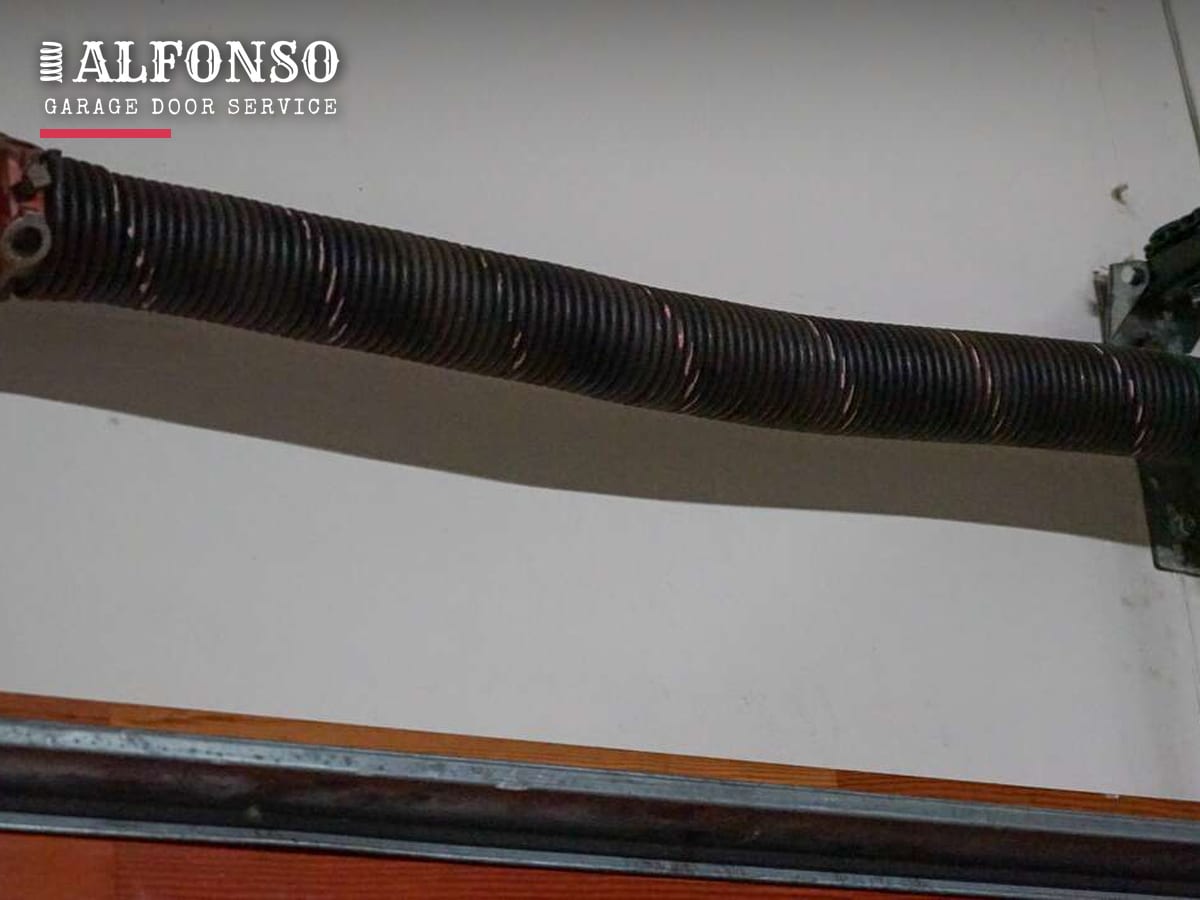
Springs can also be part of it, particularly if you hear a metallic twang or pop as the door opens. That is worth having checked sooner rather than later, since a spring under strain is a safety issue as much as a noise one.
Could My Opener Be the Real Problem?
Sometimes the door itself is fine and the opener is doing all the damage. Chain drive openers use a metal chain to pull the trolley along, and that chain transmits a lot of vibration into the ceiling mount and the framing around it. If your garage has a chain drive unit and sits under a bedroom, that alone could explain most of the noise you are hearing at night.
Belt drive openers run on a rubber belt instead of a chain, and they are noticeably quieter, especially for vibration that travels through structure rather than air. I have swapped out plenty of chain drives for belt drives in Sunset District and Richmond District homes specifically because someone upstairs could not sleep through the opening cycle anymore.
Before jumping to a full opener swap though, it is worth having an opener evaluation done first. Sometimes the noise is coming from a loose mounting bracket or worn drive gear rather than the drive type itself, and that is a much smaller fix than a full replacement.
What Should I Check Before Calling Someone?
There are a couple of things you can look at yourself before booking a visit. First, watch the door open and close from inside the garage if you can safely do so. Note exactly when the noise happens, whether it is at the start, the middle, or right as the door seats at the bottom. That detail helps a technician diagnose faster once they arrive.
Second, take a flashlight and look at the rollers and track for obvious wear, rust, or debris. You do not need to fix anything, just note what you see. If the rollers look flat on one side or the track has visible rust streaks, that is a strong hint of what is causing the noise.
What you should not do is spray a generic household lubricant on everything and hope for the best. WD-40 attracts dust and can actually make grinding worse over time. If you want to do your own maintenance between visits, a proper lube and tune service uses the right product for garage door hardware, not a general purpose spray.
When Is It Worth Calling a Professional?
If tightening a few visible bolts does not quiet things down within a cycle or two, it is time to call. Chasing a noise you cannot diagnose can waste a weekend and sometimes make things worse if you loosen the wrong thing or overtighten a bracket that was never meant to take that much torque.
For most Sunset District and Richmond District homes, a technician can diagnose and fix a noisy door in one visit. We check rollers, hinges, track alignment, and opener mounting all in the same trip, since they are often related. If you are in the neighborhood and want someone who already knows how these tuck-under garages behave, our Sunset District garage door repair team handles this exact call regularly.
Cost depends on what is actually wrong. A simple roller swap and hardware tightening often lands at $90 to $260, while something more involved like an opener drive swap runs higher. Either way, I will tell you upfront what I think it needs before starting any work, and I will tell you plainly if something does not need fixing yet.
Alfonso Garage Door services noisy tuck-under garages across the Sunset District, and most roller and hardware fixes run $90 to $260 depending on what the door needs.
Give us a call at (415) 494-4774 and let's get that bedroom quiet again.